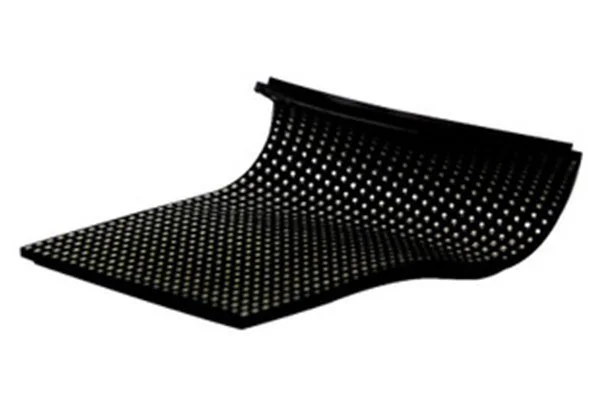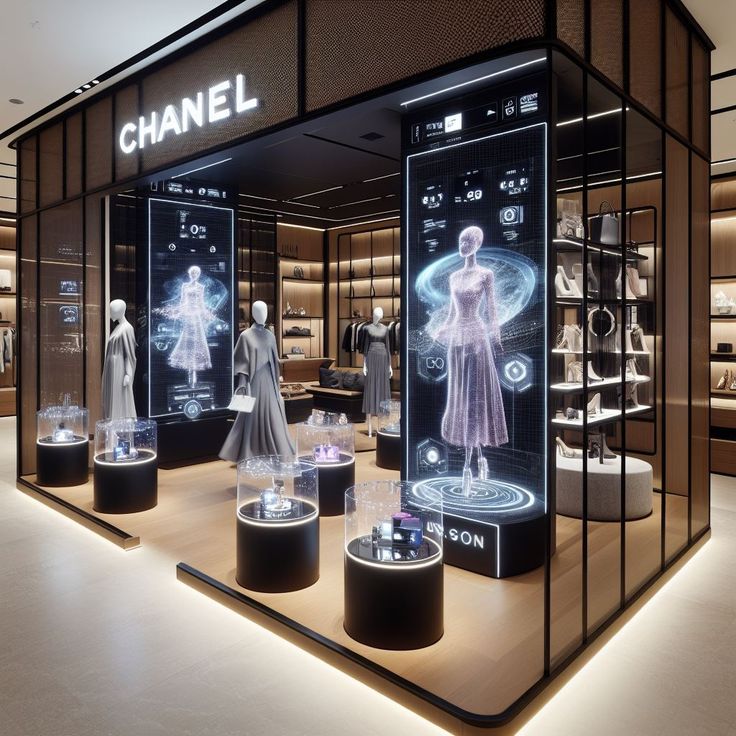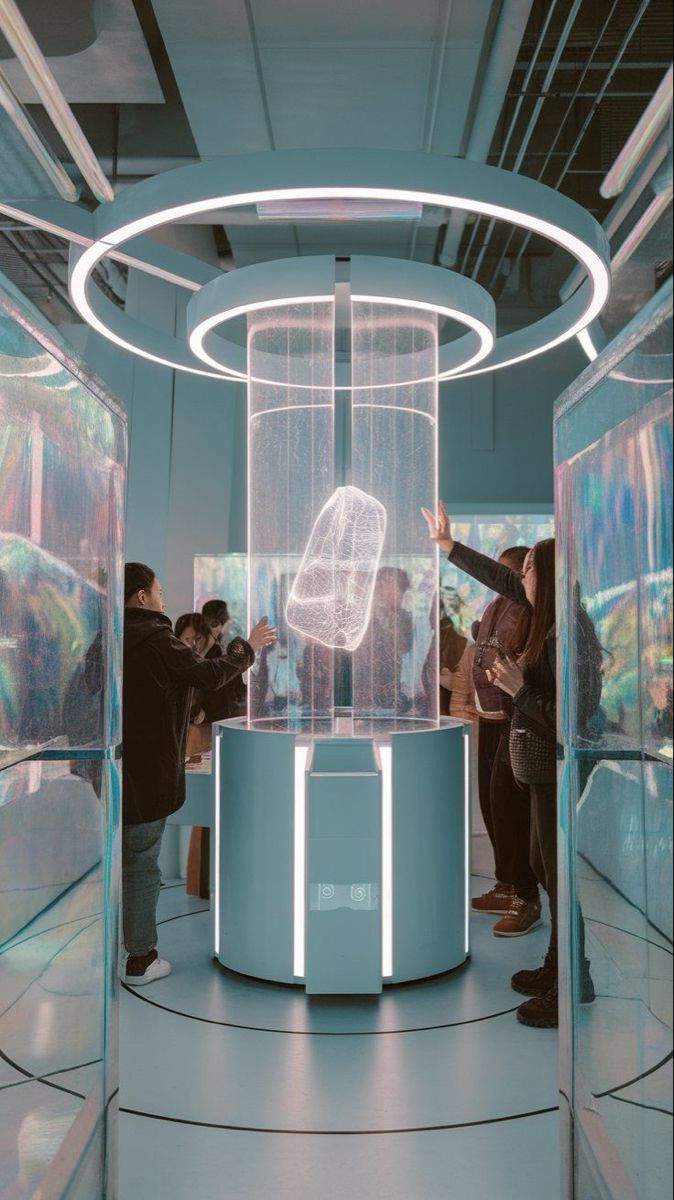
There’s something quietly thrilling about transparent displays. Not the huge, rigid walls in arenas or corporate lobbies—these are panels that move with space, letting light and air through while still showing full-motion content. Two technologies are really pushing this right now: LED crystal film screens and LED holographic screens. And comparing them isn’t simple. One isn’t strictly better than the other. Each works differently depending on where it’s used and what the goal is.
Crystal film screens grabbed attention first. Thin, lightweight, almost ghostly, they cling to glass like a second skin. Flexible, almost ephemeral, yet capable of surprisingly vivid colors. Holographic screens go for drama. They play with perception, making content look like it floats in midair. One is quiet, subtle; the other is almost theatrical. Both force a rethink of how LED displays interact with architecture and with viewers.
Physicality vs. Illusion
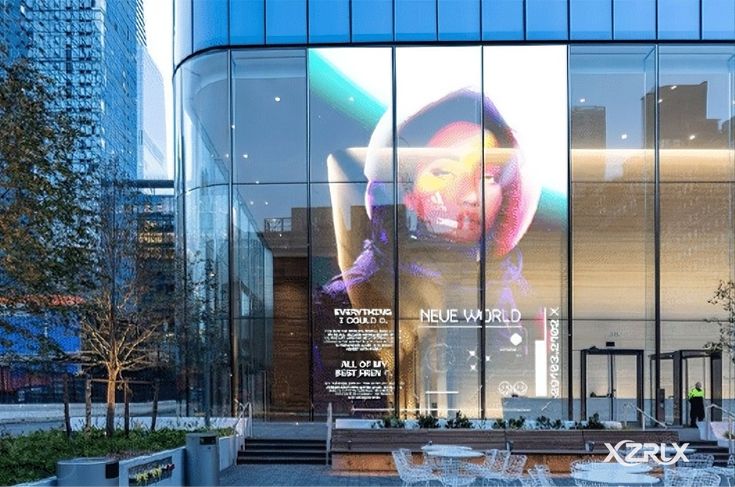
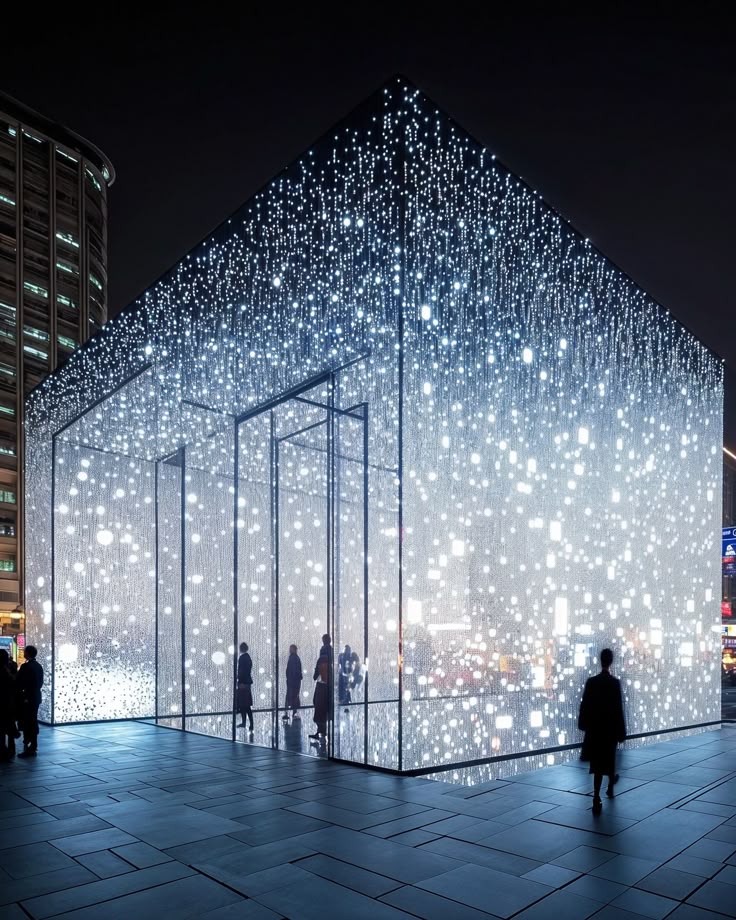
LED Crystal film is defined by its lack of mass. It’s almost too light, giving the impression it could tear in a gust of wind. But that’s exactly why it works so well—it integrates seamlessly into windows, glass façades, and partitions. You can see through it, and light passes right through. But it’s not perfect. Bright sunlight can wash it out. Pixel density is limited, so content has to be carefully designed. Often, AI-assisted brightness and color adjustments are used to keep visuals clear.
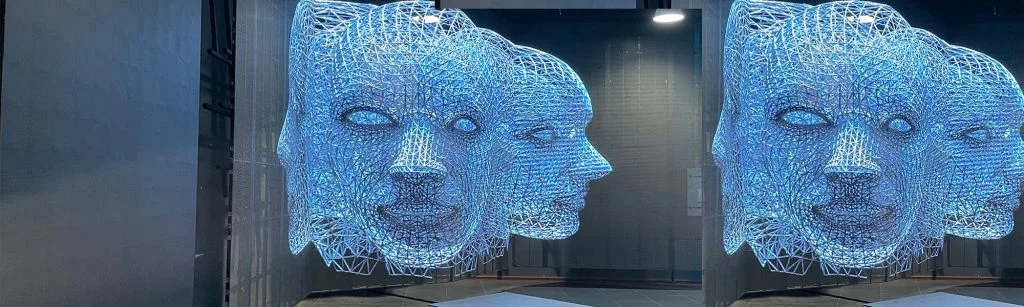
Holographic screens are a different game. They rely on LED arrays plus reflective or refractive surfaces to create a 3D illusion. The content appears untethered from the panel, floating in space. That’s dramatic, but it’s tricky. Calibration is exacting. Even small misalignments or dust can break the illusion. Ambient light matters too—not in terms of washing out color, but because it can ruin the 3D effect. These screens demand control of the environment in a way crystal film does not.
Installation Realities
Crystal film is almost effortless to install. Cut it to size, stick it to glass, power it, done. Minimal hardware, minimal fuss. That’s why it’s popular in retail, offices, and museums. It doesn’t dominate the space—it enhances it.
Holographic screens are more demanding. Panels have to be precisely aligned, because the 3D illusion depends on every angle. Mounting frames, protective layers, optical films—it all adds weight and complexity. And during installation, everything has to be perfect, or the effect falls apart. It’s not just putting a screen on a wall. It’s almost like staging a performance.
Content Considerations
Content makes the difference. Crystal film is great for conventional media: videos, animations, live feeds. You can layer content over real-world backgrounds, but the medium doesn’t add depth on its own. Motion graphics and text look good, but angles and brightness need attention.
Holographic content, on the other hand, has to be designed for perception. Animations must consider viewer position, reflection angles, and timing. A misaligned frame or badly timed sequence breaks the illusion. Some designers even simulate audience perspectives to get it right. Here, the content almost drives the technology, rather than the other way around.
Transparency vs. Spectacle
Think of crystal film as subtle and holographic screens as bold. Crystal film enhances a space without demanding attention. Holographic screens dominate it, making viewers stop and look. One is quiet, the other is performance art. Neither is inherently better. It depends on what you’re trying to do.
Novelty can be deceptive. A holographic display can wow, but if content or setup isn’t perfect, it feels gimmicky. Crystal film is understated but reliable. It works in daylight, adapts to multiple applications, and maintains clarity over time. The environment, content, and audience matter as much as the technology.
Durability and Maintenance
Crystal film is forgiving. Flexible, resilient, easy to clean. If a panel fails, replacement is cheap and simple. Holographic panels are more fragile. Optical layers degrade, reflections misalign, dust ruins the effect. Cleaning and recalibration are ongoing concerns.
Even energy use reflects this. Crystal film is efficient—fewer LEDs, less power. Holographic displays often require higher brightness to preserve the 3D effect, which ramps up energy consumption. Operationally and financially, this is a difference that matters over time.
Indoor vs. Outdoor
Both are moving outdoors, but with caveats. Crystal film works in semi-outdoor environments: canopies, bus stops, glass façades. AI-driven brightness control helps. Holographic screens outdoors are rare. Their 3D effect is fragile under direct sunlight or uncontrolled reflections. Any outdoor installation is basically a mini-laboratory: shade structures, controlled lighting, constant monitoring.
Hybrid Approaches
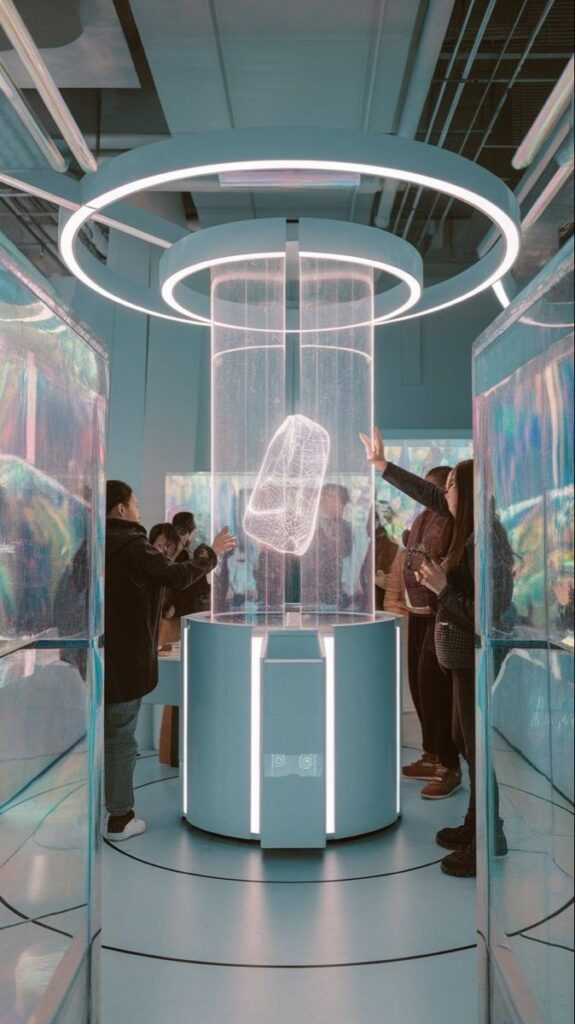
Some projects blur the lines. Crystal film can be layered with reflective media to create a subtle depth effect. Holographic panels can include transparent sections to reduce bulk. At the edges, the two technologies start to converge, and the distinction becomes less absolute. It’s less about the type of screen and more about the type of experience designers want to create.
Control Systems and AI
Neither technology is truly plug-and-play. Crystal film benefits from AI brightness and color adjustments to handle changing light. Holographic screens lean even more on computation: real-time alignment, predictive compensation for angles, sometimes motion-sensitive interactivity. Intelligence makes the difference between a display that just shows content and one that looks alive.
Audience Perception
In the end, it’s about the viewer. Crystal film communicates without dominating. It can fade into the background. Holographic displays command attention. They create tension, awe, or even disorientation. Two screens might have the same brightness, but feel completely different because one interacts subtly with perception and the other overwhelms it.
There’s also novelty fatigue. Crystal film works in repeated, everyday settings: storefronts, office partitions, museums. Holographic screens are best for singular, high-impact events. Once the brain gets used to the illusion, the surprise wears off.
Choosing Between Them
Practicality matters. Crystal film is best for transparency, flexibility, subtle integration. Holographic screens are best for spectacle, immersion, drama. Both need planning. Crystal film risks being washed out or invisible; holographic screens risk being visually chaotic. Technical skill, environmental control, and content design weigh as much as the panels themselves.
When the Lines Blur
New materials and AI adjustments are merging characteristics. A display might have the unobtrusiveness of crystal film with a hint of depth. Or a holographic screen might incorporate transparent panels for flexibility. Labels matter less than the experience. Designers are thinking about content, environment, and perception more than the tech itself.
The debate isn’t really “crystal film vs. holographic screens.” It’s about subtlety versus spectacle, integration versus performance, minimalism versus drama. And in a field obsessed with both tech and impact, that conversation is far from over.